
What should a Bali villa BOQ include before construction?
A contractor total is not a usable budget unless you can see what was measured, specified, allowed for and excluded. The BOQ turns the design into comparable construction information.
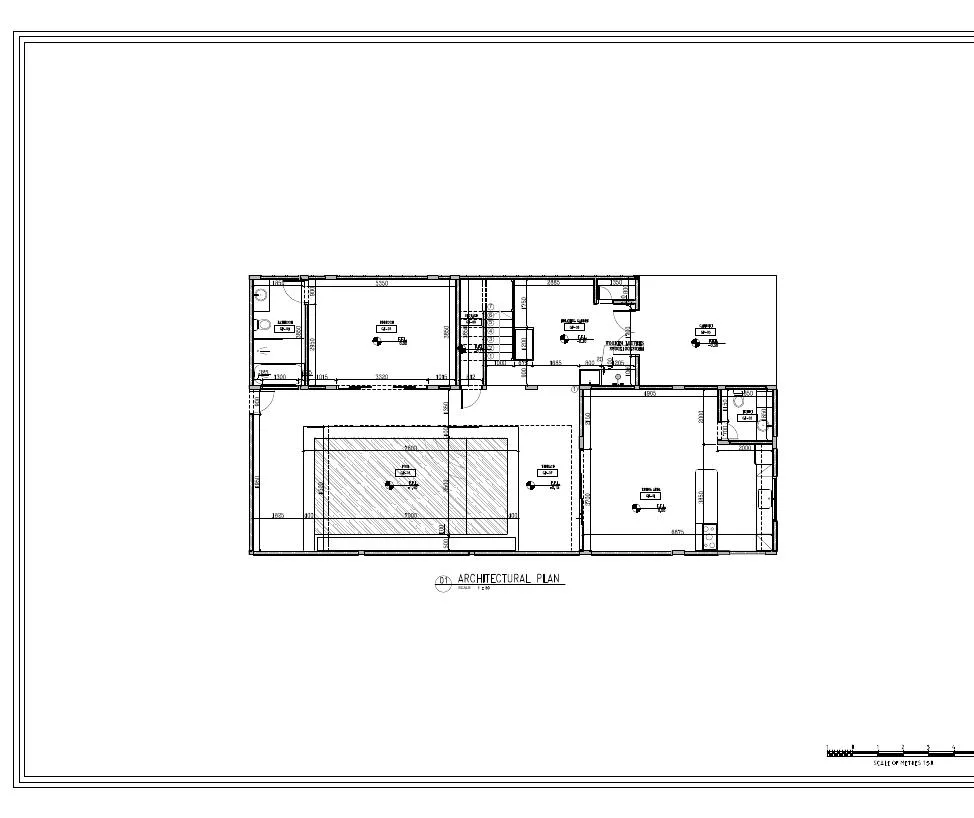
A Bali villa BOQ should identify the project and drawing revision, break the work into measurable trade sections, state quantities and units, connect each item to a specification or allowance, separate labour and supply where useful, identify taxes and contractor overheads, list provisional sums and exclusions, and define how variations and progress payments will be valued. Compare contractors on the same issued drawings and BOQ—not on different assumptions or one per-square-metre number.
What a BOQ does
A bill of quantities organises construction work into measurable items so the owner, contractor and project team can price and track the same scope. It does not replace drawings, specifications, engineering, permits or a contract. A qualified quantity surveyor or appropriately appointed cost professional should prepare or verify it where required.
1. Project and issue information
- Project name, location and client
- BOQ issue date, revision and status
- Drawing and specification register used for measurement
- Prepared by, checked by and pricing instructions
- Currency, tax treatment and validity period
- Required contractor return date and clarification process
2. Preliminaries and general requirements
- Mobilisation, temporary facilities and site protection
- Insurance, safety, supervision and permits assigned to the contractor
- Temporary utilities, access and security
- Testing, samples, shop drawings and coordination
- Waste removal and final cleaning
- Handover documents, warranties and as-built information
3. Existing conditions and demolition
For renovations, measure survey work, protection, demolition, removal, disposal, temporary support and repairs separately. State which existing items are retained, relocated or handed to the owner. Unverified concealed conditions should not be hidden inside a vague lump sum.
4. Substructure and structural work
- Earthworks, excavation and disposal
- Foundations, ground beams and slabs
- Concrete grades, reinforcement and formwork
- Columns, beams, suspended slabs and stairs
- Retaining, structural repair or strengthening
- Structural steel, timber or other load-bearing systems
5. Architecture and building envelope
- Masonry, partitions and plaster
- Roof construction, membranes, flashings and drainage
- Waterproofing systems and required tests
- Windows, external doors, glass and hardware
- External finishes, shading and façade elements
- Sealants, interfaces and weather-protection details
6. Interior finishes and fixed elements
- Floor, wall and ceiling finishes by area
- Paint systems and preparation
- Internal doors, frames and hardware
- Fixed joinery, wardrobes, kitchens and vanities
- Sanitary accessories and mirrors
- Feature elements, screens and built-in furniture
7. MEP and specialist systems
Electrical, lighting, plumbing, hot water, drainage, air-conditioning, ventilation, pumps, tanks, data, security and specialist systems should reference the relevant consultant information. Avoid a single ‘MEP complete’ line when the design and performance requirements are not stated.
8. Pool, landscape and external works
- Pool structure, waterproofing, finishes and equipment
- Decks, terraces, paths and driveways
- Drainage, retaining and external levels
- Planting, soil, irrigation and lighting
- Boundary walls, gates and external structures
- Utility connections and site-specific infrastructure
9. Furniture, fixtures and equipment
Separate built-in items from loose furniture, decorative lighting, appliances, artwork, linens and operating equipment. State whether the contractor supplies, installs, coordinates or excludes each item. Clarify delivery, storage, damage, warranty and import responsibility.
10. Quantities, units and rates
Each measurable item should use an appropriate unit—m², m³, linear metre, kilogram, number, set or lump sum—with quantity, unit rate and total. The measurement basis must be consistent across bidders. A zero quantity, blank rate or unclear lump sum needs clarification before comparison.
11. Specifications and named allowances
Link finishes and equipment to a brand, model, performance requirement or written allowance. An allowance is not the final selection price. State whether it covers supply only or supply and installation, and explain what happens if the approved choice is above or below it.
12. Provisional sums and contingencies
Use provisional sums only for work that cannot yet be defined, and identify what information will convert each sum into a fixed price. Keep owner contingency visible and controlled rather than distributing it across contractor rates. Spending it should require evidence and written approval.
13. Exclusions and owner-supplied items
List land, legal work, consultants, permits, utilities, furniture, equipment, taxes, external works and any other excluded responsibility explicitly. An exclusion affects the total project budget even when it is absent from the contractor's price.
14. Contractor overhead, profit and tax
State how overhead, profit, management, mobilisation and tax are applied. Confirm whether they are included in each rate, added as percentages or shown separately. Every bidder should follow the same pricing instructions so totals can be compared fairly.
15. Variations and rate rules
The contract should define who can instruct a variation, the evidence required, which BOQ rates apply, how new rates are agreed and whether overhead, profit and time impacts are added. No site message should become paid extra work without a traceable written process.
16. Progress payments and evidence
Link payments to measured completed work, approved materials on site where permitted, tests, inspection records and the contract schedule. A percentage claimed by the contractor should be checked against the BOQ and actual progress before certification or payment.
How to compare two Bali contractor quotations
- Issue the same drawings, specifications and BOQ to both bidders
- Check every quantity, blank rate, allowance and exclusion
- Separate arithmetic differences from scope differences
- Compare brands, performance and installation—not only totals
- Review programme, payment terms, warranty and variation rules
- Confirm the contracting entity, licences, insurance and responsible professionals
- Normalise the quotations before choosing a preferred bidder
Cost benchmarks are not a substitute for a BOQ
Element's early partner-led construction benchmark starts from IDR 7,000,000/m² for an agreed scope, with supervision and project management referenced from 17% of the approved construction value. These figures help early planning; the actual contract value must come from the site, current drawings, specification, BOQ and defined responsibilities.
How design fees sit outside the BOQ
Element publishes USD 10/m² for Bali 3D concept design and USD 5/m² for the separate agreed drawing package. Professional design, surveys, engineering, permits, supervision and other consultant services should be identified separately from the contractor construction BOQ unless the procurement structure expressly combines them.
Hitomi Villa: why the BOQ matters in renovation
Hitomi Villa began as a half-built structure. The existing shell, demolition, repair, retained work and new finishes had to be understood separately. The published construction reference of IDR 7,000,000/m² applies to that agreed renovation scope through final finishes; it is not a universal rate for every incomplete villa.
What to send for an early cost review
- Exact location and access conditions
- Current drawings and survey information
- Existing-condition records for renovations
- Target built and design areas
- Room schedule and intended use
- Finish and furniture level
- Pool, landscape and external scope
- Target programme and budget range
Common questions
What is a BOQ for a Bali villa?
A bill of quantities is an itemised construction-pricing document that lists work sections, quantities, units, specifications or allowances and pricing fields. It helps contractors price the same scope and supports cost comparison, variations and progress valuation.
Do I need a BOQ before hiring a Bali villa contractor?
A sufficiently detailed BOQ, drawings and specification greatly improve quotation comparison and cost control. The appropriate level depends on the procurement method and project stage, and a qualified cost professional should prepare or verify it where required.
Is a contractor's price per square metre enough?
No. A per-square-metre figure cannot show the structure, finishes, MEP, pool, furniture, allowances, exclusions, site conditions or variation rules. Use it only as an early benchmark before an itemised project quotation.
What is the difference between an allowance and a provisional sum?
An allowance sets a pricing amount for a product or finish that has not been finally selected. A provisional sum covers a work package that is not sufficiently defined. Both need a written basis and a later adjustment process.
Who should prepare a villa BOQ?
A qualified quantity surveyor or appropriately appointed cost professional should prepare or verify the BOQ where required, using coordinated drawings and specifications from the project team. Contractor pricing should follow the same issued document.
How should progress payments be checked?
Measure completed work against BOQ quantities and contract milestones, confirm approved materials and tests, and document defects, retention and variations before payment is certified.
Does Element's USD 10/m² design fee include the construction BOQ?
No. USD 10/m² is the published Bali 3D concept-design fee, and drawings are a separate USD 5/m² package. A detailed construction BOQ and quantity surveying are separate unless explicitly included in the written proposal.